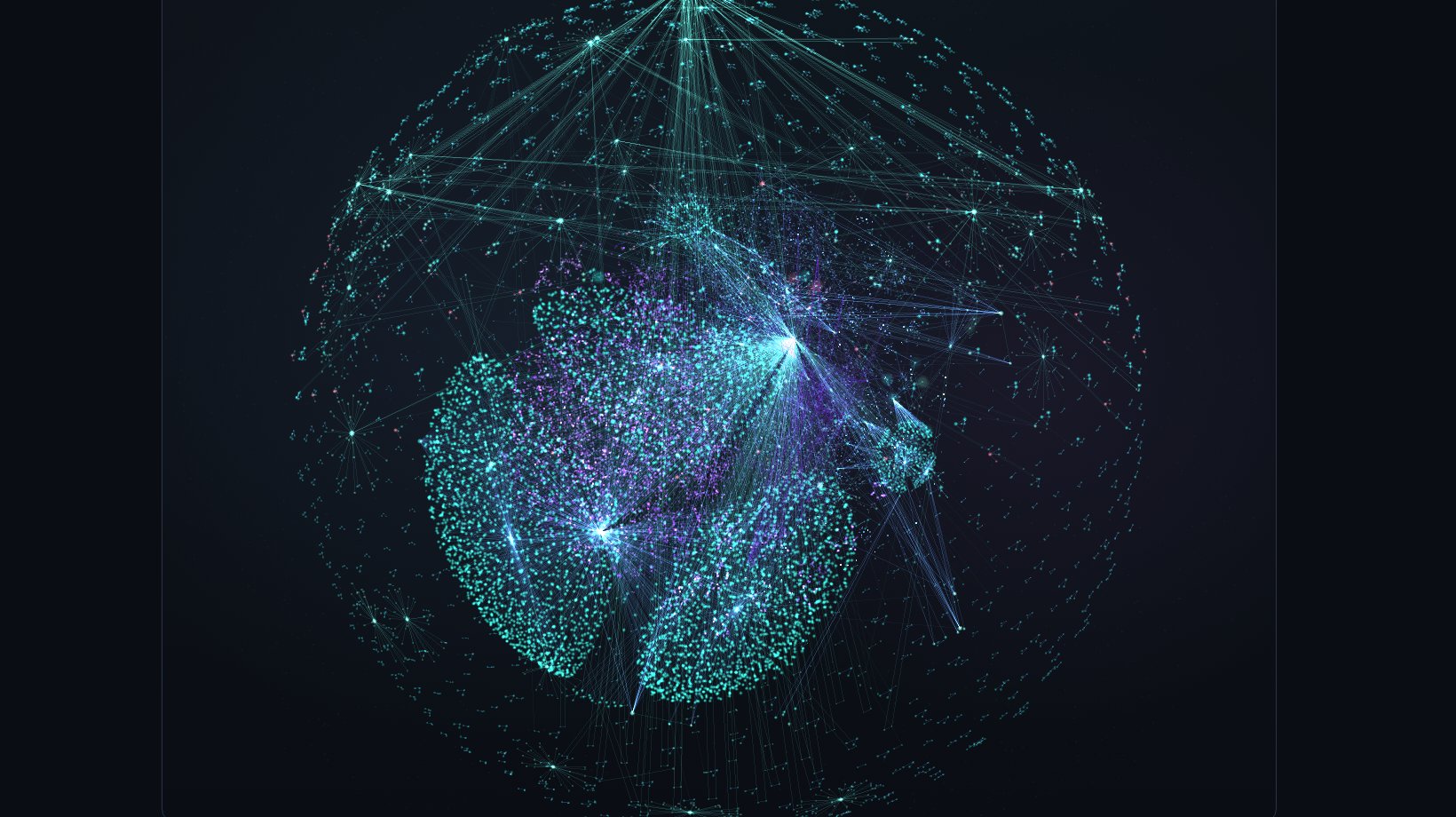
Every governed object, every recorded relationship, and every attributed state transition in our own estate, rendered directly from the PostgreSQL system of record and published as an interactive 3D replay. Names, dates, and file identities are pseudonymized; counts, structure, totals, and rhythms are exact.
The AgentOS object graph in PostgreSQL: agentos_objects, agentos_object_state_transitions, agentos_object_relationships, agentos_object_evidence_refs, plus the FAFO Memory code index and observation store. Read-only extraction; the render never touches the live system.
A build pipeline extracts the graph with SELECT-only queries, resolves typed links from object metadata, lays out the governed work with a 3D force algorithm, positions code chunks and observations by their own embedding vectors (BGEM3, shared space, joint projection), and emits a single sanitized payload. A string-inventory auditor with a blessed allowlist gates every build: any string not explicitly approved fails the build.
ONE ESTATE · ONE GRAPH

  governed objects            26,866
  state transitions           36,515   each with actor + authority source
  recorded links              26,431   typed + membership + evidence + lineage
  distinct status paths          103
  evidence references          3,632   each with producer and consumers

  GROUNDING CORE (same embedding space)
  AST code chunks             77,527   674,025 code-graph edges
  banked observations        289,304   reused 452,834 times

  attributed cost           $1,990.52  from 11,193 per-call cost records
  tokens processed            3.197B